AltaCaliber AltaCaliber
Four men's multivitamin formats — a matte tablet, a translucent softgel, a two-piece capsule and a cast gel — resting in separated wells of a granite-look tray on a pale bench

Tablets, gummies, capsules: which format fits

Serving size and format travel together, so the format question is really a routine question for men's multivitamins.

Why format first

Why format matters more than the front label

The front of a bottle sells a promise. The format decides whether you get the dose. A product that is easy to swallow but requires three gummies per serving is not a one-a-day habit, and a tablet that must be taken with food is a different commitment than one you can take dry. Serving size and format travel together, so the format question is really a routine question — start there, then compare ingredients.

Retail shelves prove the point. Walgreens' men's multivitamin category stocks all four formats side by side, and Nature Made sells its men's multis as both tablets and gummies. Two products can carry a similar nutrient list and behave completely differently in your day, because a tablet, a gummy, a capsule, and a gel are not interchangeable delivery methods. It is the reverse of how most people shop, and it leads to fewer abandoned bottles.


A man in his forties seated near a window in soft daylight, cropped from the shoulder down
Where and when you would actually take the product predicts adherence better than the ingredient differences between two similar formulas.

The four formats, side by side

Each format is a different bargain. Read the row that matches how you actually take a supplement, then check its plate below the bench.

Four identical matte pressed tablets lined up on a granite-look bench surface

Tablets

The workhorse of the category. Tablets compress a larger mineral load into a smaller volume, which is why broad multivitamins and multiminerals often default to tablet format. They store and travel well and rarely need refrigeration in Jakarta's climate.

Two-piece hard capsules resting apart on a pale stone bench

Capsules

Close to tablets on coverage and closer to gummies on comfort. Usually easier to swallow than a pressed tablet, and without the sugar question gummies carry. Many capsule products are designed for two-per-serving dosing, so read the label before assuming a single-capsule routine.

Soft translucent gummy pieces resting on a granite-look bench

Gummies

The format that gets people started. No water, no swallowing difficulty, easy to remember. The trade-offs are real too: gummies typically carry fewer minerals, often include added sugar, frequently require more than one piece per serving, and shorten their shelf life in heat.

A soft cast gel supplement piece on granite-look bench stone

Gels and soft formats

The space between a capsule and a gummy. They swallow easily, carry oil-based nutrients well, and hold up reasonably in a bag or desk drawer. Read the serving size carefully, since soft formats vary widely in how many pieces count as one dose.

What to compare when formats look equal

When two products share a format, move to the panel. Compare in this order and the men's supplements aisle makes sense faster.

Compare first What you are reading Why it changes the routine Pick
Serving size One tablet versus two capsules per dose Changes the per-day cost and the convenience of the habit
Mineral list Which minerals are present, and in what quantity Minerals are usually where formats differ most
Other ingredients The line after the vitamins: sweeteners and binders Where a gummy's added sugar and a tablet's binders actually show up
Nutrient story The claim printed on the front of the bottle Worth reading last, after the panel, not before

Format first, panel second, marketing last. That order will serve you well across the whole men's supplements aisle.

Matching a format to your actual day

Think about the ten minutes around your existing routine. If you eat breakfast at home, a tablet labeled "take with food" is easy. If you commute early and eat at the office, a gummy or capsule that travels well in a bag makes more sense. If you travel often, tablets and capsules handle heat better than gummies.

Write down where and when you would take the product before you choose the format. That one detail predicts adherence better than any ingredient difference between two similar formulas. Jakarta's humidity adds a second filter: pressed tablets are the most forgiving, capsules are close behind as long as the lid stays sealed, and gummies soften and stick in heat and do not improve after a few weeks in a warm car. If the bottle lives in a bathroom cabinet or a kitchen shelf near the stove, favor tablets or capsules and keep the bottle closed. Format choice and storage are the same decision in this climate.

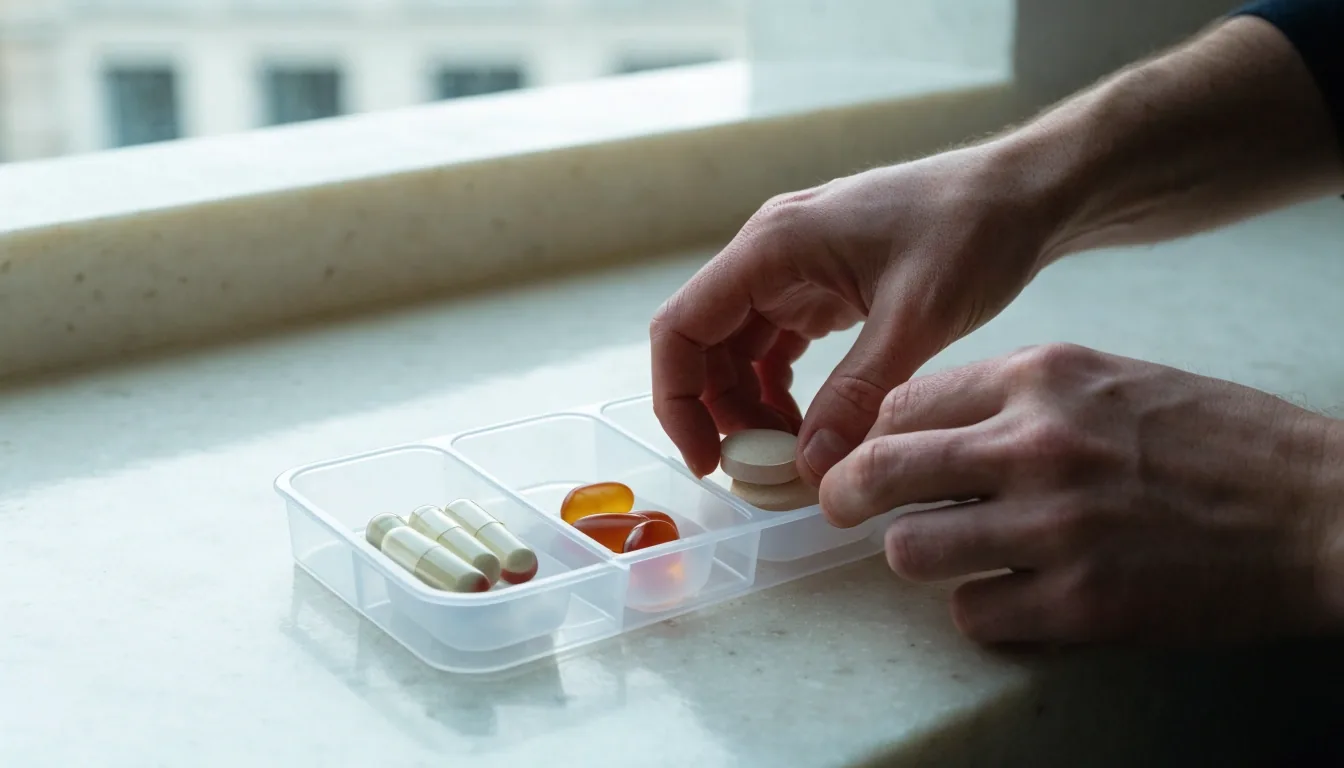
Hands arranging matte tablets into a shallow compartmented dish on a pale bench

A routine you can keep

  • A breakfast-at-home routine fits a "take with food" tablet with no extra effort.
  • An early commute with office breakfast points toward a bag-friendly capsule or gummy.
  • Frequent travel favors tablets and capsules over anything that softens in heat.

Storage under Jakarta humidity

Pressed tablets are the most forgiving. Capsules are close behind as long as the lid stays sealed. Gummies soften and stick in heat. Keep the bottle closed and away from the stove, and any of the four formats will behave better than they would on an open shelf.

None of this is dramatic, but format and storage are the same decision in this climate. A bottle that survives your shelf is a bottle you will actually finish.

There is no single winning format

A tablet beats a gummy for mineral load. A gummy beats a tablet for getting taken at all. A capsule is often the practical middle ground. The format that wins is the one you keep taking — pick it from your day, not from the front of the bottle.

Format questions we hear most

Can I swap a tablet for a gummy of the same formula at the same dose?

Usually not one-for-one. Gummies typically require more than one piece per serving and often carry a different mineral list, so two products sold under the same name can still behave differently. Read serving size on both before assuming they are equivalent.

Which format travels best on a plane or a long commute?

Tablets and capsules. Both handle heat and humidity better than gummies and keep their shape in a bag or a desk drawer, so a commute or a flight is less likely to change how the product behaves by the time you take it.

Do capsules really have fewer binders than tablets?

As a general pattern, yes — capsules tend to have shorter other-ingredients lines than pressed tablets. That is a useful comparison point, not a rule, so read the panel on the product you are considering rather than assuming it.

Are gels worth trying if I dislike both large tablets and gummies?

They are a reasonable middle option. Gels swallow easily and carry oil-based nutrients well, and they hold up reasonably in a bag. Just read the serving size carefully, since soft formats vary widely in how many pieces count as a single dose.

Should I start with a small pack?

Yes, if the format is new to you. Some tablets are large and some people struggle to swallow them. A format you cannot comfortably take is not a bargain at any price, so a small pack is the honest way to test a first tablet or capsule.

An empty granite-look compartmented tray at rest on a pale bench
An empty tray, wells bare, setting the reading pace.
Two empty granite trays of different grain side by side on the bench
Two grains, one light — formats differ the same way.
A single translucent softgel on the long grain of a granite bench
One object, one measure — the comparison starts small.

Pick a format you can keep taking

Write down where and when a format would fit your day, then let the panel decide the rest. If a question is still open, our editors read every message.