

JAKARTA · SUPPLEMENT LABEL READING AID
Ingredient glossary for men's supplements
Plain-language definitions of the vitamins, minerals, and botanicals most often printed on men's multivitamin and vitality labels — written for reading a bottle in a Jakarta pharmacy or comparing listings online.
Three groups, in the order the label prints them
This glossary defines the ingredients and botanicals that turn up most often in natural supplements for men's health. Terms are grouped by what they physically are: vitamins, minerals, and botanicals. Where a term belongs to a specific kind of product — a stamina or vitality formula rather than a daily multivitamin — that is noted beside the definition.
Nothing on this page makes a health claim about any ingredient, and nothing here replaces advice from a qualified professional. The goal is narrower and it is the goal of every entry below: so that you can open a supplement facts panel and know what you are looking at, line by line, without guessing.
- A Vitamins — the upper rows The nutrients most men's products are built around, with a percent daily value beside each one.
- B Minerals — where formulas diverge Zinc, magnesium, selenium, calcium — the rows that decide how a tablet is built.
- C Botanicals — no daily value column Plant-derived ingredients such as maca, tribulus, and saw palmetto, listed without a nutrient value.
Vitamins: the baseline of any men's multi
Vitamins occupy the upper rows of a supplement facts panel. These are the four a visitor meets most often on a men's multivitamin label.
- Vitamin D
- One of the most widely listed vitamins in the men's category, and one of the entries that changes most visibly when you move from a standard formula to an age-specific one.
- B vitamins
- A group rather than a single nutrient. "B-complex" simply means several B vitamins printed together, and this is the cluster most often connected to energy metabolism wording on a label.
- Vitamin C
- Appears widely across the category, usually in products that lead with immune-related positioning on the front of the bottle.
- Percent daily value
- The column, not an ingredient — but the one piece of arithmetic worth doing. It tells you how much of each nutrient a single serving delivers, which is the number to compare between two bottles.
Minerals: zinc, magnesium, selenium, calcium
Minerals take up more physical space in a tablet than vitamins do, which is one reason mineral content drives format decisions — a tablet carrying a heavy mineral load is a bigger, harder-pressed object than one that is mostly vitamins.
Zinc and magnesium appear frequently in men's multimineral and multivitamin formulas. Selenium and calcium show up in broader multimineral products. This glossary describes what each mineral is on the panel, not what it will do for you.
Definitions describe what appears on a panel. They are not intake advice.
Iron and why age-specific formulas change it
Iron is a mineral that appears in many standard multivitamins and less often in 50+ formulas. That shift is a formulation choice, not a statement about your health. If you are comparing products across age groups, the iron line is one of the fastest ways to see which category a bottle belongs to — the differences between a standard men's multi and a 50+ formula show up earliest in the mineral rows.
Because needs are individual, iron is a question for a healthcare professional rather than for a label. This page describes the pattern across product categories; it does not advise on your intake.
Find formulas by age and lifestyleEnergy metabolism and the B-complex story
"Energy metabolism" is a label phrase, not a promise of alertness. It appears on products such as GNC Mega Men Energy & Metabolism, and it connects back to the B vitamins printed on the panel.
B-complex refers to the group of B vitamins listed together rather than to one ingredient. If a formula emphasizes energy metabolism, two things are worth checking: whether the B vitamins are present in meaningful amounts per serving, and whether the product also carries stimulants. Most men's multis in this category do not. That distinction matters when you compare an energy-focused formula with a plain daily multi, and it is the reason the two sit on different shelves even when the front of the bottle looks similar.
What to check on the panel
- Are the B vitamins listed individually, with a daily value beside each?
- Does the ingredient list name a stimulant the label does not lead with?
- Is the serving one tablet or several, and does the daily value assume that count?
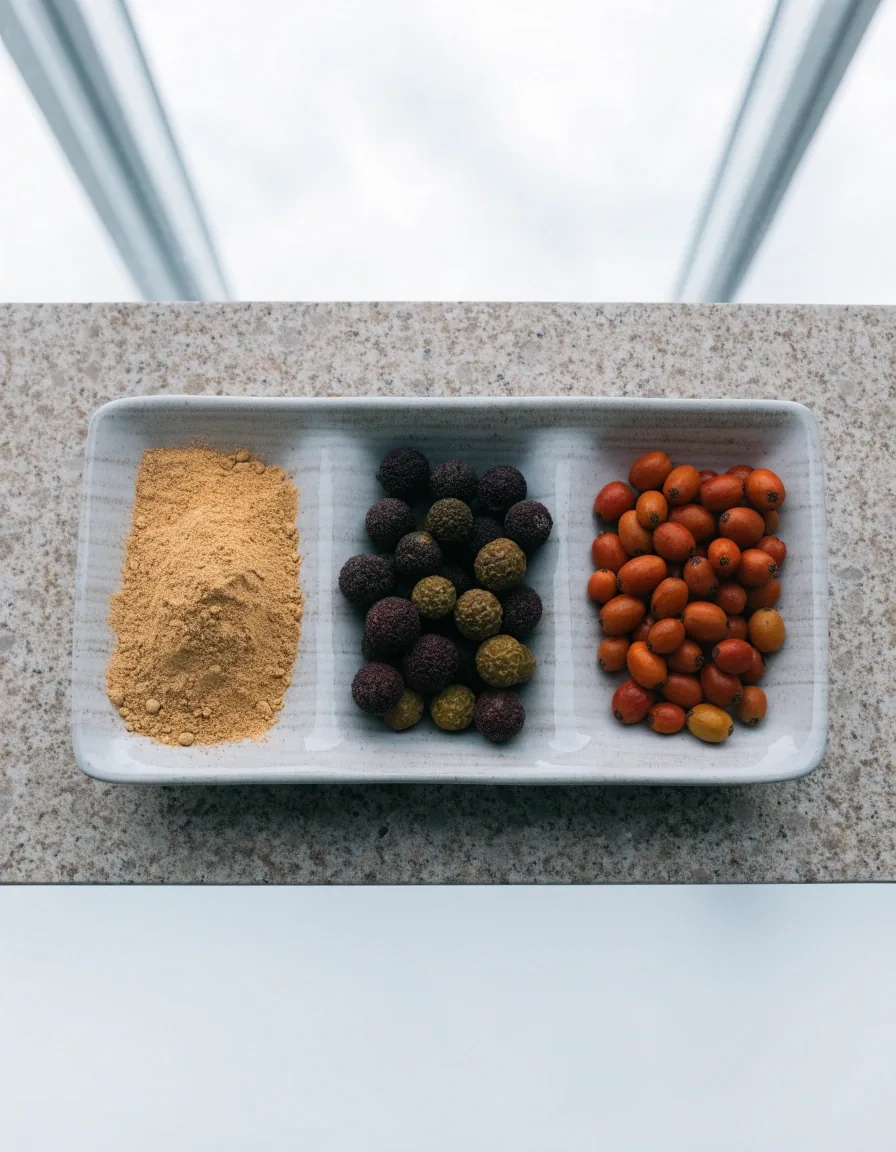
Botanicals: maca, tribulus, saw palmetto
These three turn up constantly in men's health products, and none of them is a vitamin or a mineral. Maca, tribulus, and saw palmetto are botanicals — plant-derived ingredients rather than nutrients. On a panel they usually appear in formulas positioned around vitality or stamina rather than around daily coverage.
You will notice they are listed without a percent daily value, because that column applies to nutrients and not to plant ingredients. Whether any botanical belongs in your routine is a personal health question, and a good one to bring to a qualified professional. What this glossary can do is tell you that the word you are reading is a plant, not a vitamin, and that you are therefore looking at a different kind of product.
Maca
A root botanical, most often seen in products marketed around vitality rather than in plain daily multis.
Tribulus
A plant extract botanical, typically grouped with stamina-positioned formulas and listed as part of a blend.
Saw palmetto
A palm-derived botanical, common in men's formulas and frequently printed in a proprietary blend line with no individual amount.
Vitality and stamina products sit on a separate shelf
Not everything in the men's health aisle is a multivitamin or a multimineral. Natures Health Cougar, a 12-tablet product listed by Guardian Indonesia, is a male vitality supplement with performance-oriented naming. That kind of branding signals a different product type and a different set of expectations.
Reading these labels carefully means noticing what is absent. There is no broad vitamin and mineral list and no daily-support framing — the panel is built around botanicals and performance language instead. If a product is built that way, treat it as its own category rather than as a substitute for a daily multi. The two answer different questions, and comparing them line by line is what tells you which one you are holding.
Daily multi or vitality formula
- A long vitamin and mineral list with daily values points to a daily multi.
- A short panel of botanicals with no daily values points to a vitality formula.
- Serving count and tablet size tell you how the two are meant to be taken.
How to use this glossary
Look up the term
Find the word printed on the panel in one of the three groups above. Most labels repeat the same handful of terms.
Read the two sentences
Definitions are kept short on purpose. Read them and go back to the label, not to a shopping page.
Sort what you found
If a term on the bottle is a vitamin, a mineral, or a botanical, you know what shelf you are on before you compare.
This page is a reading aid, not a recommendation engine. It does not rank products, and it does not tell you what to take. If a term appears in a product you are considering and you cannot tell whether it is a vitamin, a mineral, or a botanical even after looking it up, that is itself a useful signal about how clearly the label is written.
The same holds if a proprietary blend hides individual amounts behind a single line. You are not failing to understand the panel — the panel is simply giving you less to work with. That is worth knowing before you spend anything, and it is the habit this glossary is meant to leave you with.
Questions readers bring to a supplement label
Short answers about reading panels, comparing categories, and where this page stops.
Why do botanical entries have no percent daily value?
That column applies to nutrients — vitamins and minerals — so plantingredients are listed without it. A botanical line without a daily value is normal, not a missing figure. It does tell you that you are reading a vitality or stamina formula rather than a standard daily multi.
What is the fastest way to compare two multivitamins?
Start at the mineral rows, not the vitamins, and read the percent daily value column down the whole panel. Add up how many servings the daily value assumes. Two bottles that look identical on the front often separate clearly once you read those two things together.
Does this page recommend any ingredient or brand?
No. Definitions here describe what a term is on a label, nothing more. Product names appear only where they illustrate a category — an energy-focused multi, or a vitality product — so you can recognise the pattern. Intake questions belong with a qualified professional.
Are these products medicines?
The products described here are dietary supplements, not medicines, and are intended as supplements rather than as treatments. They do not diagnose, treat, cure, or prevent any condition. If you take prescription medication or manage a health condition, speak with a qualified professional before adding anything to your routine.
Read the next panel with the glossary open
Keep this page beside you the next time you pick up a men's multivitamin or a vitality formula. If a term is missing here, ask the editors directly — the glossary grows from questions readers actually bring to a label.
Editorial contact
Questions about a term on this page are welcome during working hours, Monday to Friday, 9:00 AM – 6:00 PM.
+62 21 6381 7109
AltaCaliber · Jl. Gajah Mada No. 12, Petojo Utara, Gambir, Jakarta Pusat, 10130